
Most Melbourne garden projects go wrong in the same way: the planting goes in before the ground is right. Here is how to plan one properly — what order the work happens in, what it costs, and the Melbourne-specific thing that quietly ruins gardens built without it in mind.
The short answer
Start with drainage and levels, not plants. Melbourne sits largely on reactive clay, which holds water and moves with the seasons. Lawn over waterlogged ground fails, paving on a poor base moves, and a retaining wall without drainage behind it leans. Get the ground right, then build, then plant. Most backyard projects run $5,000 to $50,000 depending on scope.
The Melbourne problem nobody mentions until it is too late
Much of this city — particularly the western and south-eastern growth corridors — sits on reactive clay.
Reactive clay does two things that matter enormously in a garden. It holds water rather than letting it drain away, so after sustained winter rain it sits saturated. And it changes size, swelling when wet and shrinking when dry, so the ground is in slow seasonal motion all year.
That is why so many Melbourne gardens develop the same complaints after two or three years:
- Lawn that goes yellow and boggy through winter and bakes hard in summer
- Paving that lifts, dips or opens up at the joints
- Retaining walls that start to lean
- Garden beds where plants keep dying for no obvious reason
- Paths that crack along a line
None of it is bad luck. It is a garden built on ground that was never addressed. And it is entirely preventable — it just has to be designed for at the start, because retrofitting drainage under a finished garden means taking the garden apart.
The right order of work
This sequence is the single most useful thing in this article. Done in this order a garden works. Done out of order it gets rebuilt.
| Stage | What happens | Why it comes here |
|---|---|---|
| 1. Design and levels | Plan drawn, falls and levels set | Everything else is built off these |
| 2. Demolition and excavation | Old surfaces out, spoil removed, levels cut | Access is easiest when the site is clear |
| 3. Drainage | Ag lines, pits, falls away from the house | Impossible to add later without demolition |
| 4. Retaining and structures | Walls, steps, edging | Needs the levels finished first |
| 5. Hard landscaping | Paving, paths, driveway | Bases must be built on settled ground |
| 6. Soil and planting | Soil improved, beds planted, turf laid | Last, so it is not driven over |
| 7. Irrigation and mulch | Drip lines, pop-ups, mulch | Finishes and protects everything above |
The most common and most expensive mistake is doing step six first, because it is the part people can picture. Plants go in, lawn goes down, and eighteen months later the whole lot comes out to fix a drainage problem that was always there.
Drainage: the part worth paying for
If the budget is tight, this is the last thing to cut.
Water has to go somewhere. In a Melbourne garden on clay, if you have not decided where, it will decide for you — usually against the house, or into the lowest corner where it sits for a week after rain.
A properly drained garden has:
- Falls set away from the building, so surface water runs where you want it
- Ag lines in the areas that collect, running to a legal discharge point
- Drainage behind every retaining wall, with aggregate and an outlet
- Permeable areas so not everything becomes runoff
- Soil improvement in planting beds so roots are not sitting in water
It is invisible once the garden is finished, which is exactly why it is the first thing removed from a quote that needs to come in cheaper. The same pattern runs through every trade we work in — the invisible preparation decides the outcome, whether that is a garden, a concrete driveway or an epoxy floor.
Retaining walls
On a sloping Melbourne block, retaining is usually unavoidable. The choice of material matters less than what happens behind it.
| Type | Typical use | Notes |
|---|---|---|
| Timber sleepers | Low garden walls, beds | Cheapest, shortest life, fine for low heights |
| Concrete sleepers | Mid-height walls | Longer life, timber look available |
| Concrete block | Higher or structural walls | Strong, engineered for height |
| Stone / bluestone | Feature and front walls | Most expensive, best looking |
Every one of them fails the same way if drainage is skipped. A wall holding back saturated clay is holding back enormous weight, and water pressure behind a wall is what makes it lean, bow and eventually move. Aggregate backfill and an ag line taking water away is non-negotiable.
Above roughly a metre, engineering input is normal and sometimes required. We flag that at the quote rather than after.
Paving and paths
Concrete pavers, bluestone and porcelain all perform well in Melbourne. The decision that actually determines whether paving stays flat is the base underneath it.
Paving laid on inadequately prepared ground will move, regardless of the quality of the paver. On reactive clay it will move more. A properly built base — excavated, compacted, correct depth of crushed rock, bedding sand screeded level — is the difference between paving that is still true in ten years and paving that is a trip hazard in three.
Where a larger area or a driveway is involved, poured concrete is often the better answer, and because we also do concreting that can be part of the same project rather than a second contractor and a second mobilisation.
Lawn: turf or synthetic
| Instant turf | Synthetic grass | |
|---|---|---|
| Feel | Cool underfoot, soft | Hot in direct summer sun |
| Maintenance | Mowing, feeding, water | Occasional brush and rinse |
| Drainage | Absorbs water | Needs a drained base underneath |
| Install cost | Lower | Higher |
| Best for | Open sunny yards, kids, pets | Deep shade, small courtyards, zero upkeep |
Turf is the default and generally the better choice where it will grow. Synthetic earns its place in the spots where grass genuinely will not — a narrow shaded side yard, a courtyard that never sees sun, or a household with no time for mowing. The honest caveat about synthetic is heat: in full January sun it gets uncomfortable underfoot.
Either way, what is underneath matters. Turf laid straight onto compacted clay will struggle no matter how good the turf is.
Planting that survives a Melbourne summer
The single biggest planting mistake is choosing from a catalogue rather than for the position.
- Aspect first. A north-facing bed and a south-facing bed are different climates three metres apart.
- Soil second. Clay beds need improvement and raising rather than digging a hole and hoping.
- Water third. Natives and Mediterranean species handle our dry summers with a fraction of the water of a thirsty exotic garden.
- Mulch always. It holds moisture, suppresses weeds and moderates soil temperature. It is cheap and it does more than almost anything else.
Irrigation — drip lines to beds, pop-ups to lawn, on a controller — is what gets a garden through January. In Melbourne it is the difference between a garden that survives its first summer and one that gets replaced.
What it costs
Typical Melbourne market ranges, so you can sanity-check a quote:
| Scope | Typical range |
|---|---|
| Lawn, beds, mulch, planting | $5,000 – $15,000 |
| Above plus patio or small deck, edging, low walls | $15,000 – $30,000 |
| Full rebuild — paving, retaining, lighting, irrigation | $30,000 – $50,000+ |
Component rates vary widely: instant turf, paving and retaining walls each move with material, access and site conditions. We quote after a site visit rather than per square metre over the phone, because a flat yard with rear lane access and a steep block with a 900mm side path are completely different jobs at the same square metreage.
Timing it right
Autumn and spring are the best windows. Soil is workable, turf establishes, and planting has time to settle before summer stress or winter waterlogging.
Summer works but new turf and plants need substantially more water to establish, and some planting is better held over.
Winter is viable for hard landscaping — retaining, paving, structures — though saturated ground slows excavation. It is also when drainage problems are most visible, which makes it a good time to get a garden assessed even if the work happens later.
Six questions worth asking a landscaper
- What are you doing about drainage? If the answer is vague, the garden will waterlog.
- What goes behind the retaining wall? Aggregate and an ag line, or nothing.
- How is the paving base built? Depth of crushed rock, compaction, bedding.
- Is the price fixed, and what would be a variation?
- Is demolition and removal included? Spoil and green waste cost real money to dispose of.
- Can I see your own completed projects?
Doing the whole outdoor space at once
Gardens rarely exist on their own. Most Melbourne backyard projects touch three or four trades, and running them separately means three mobilisations, three quotes and everyone working around everyone else.
Because we cover several of these in-house, a project can run as one job:
- Landscaping — design, drainage, retaining, paving, turf and planting
- Concreting — driveways, paths, slabs and exposed aggregate as part of the same programme
- Fencing — boundaries, screens and gates, with the fence line and the levels planned together
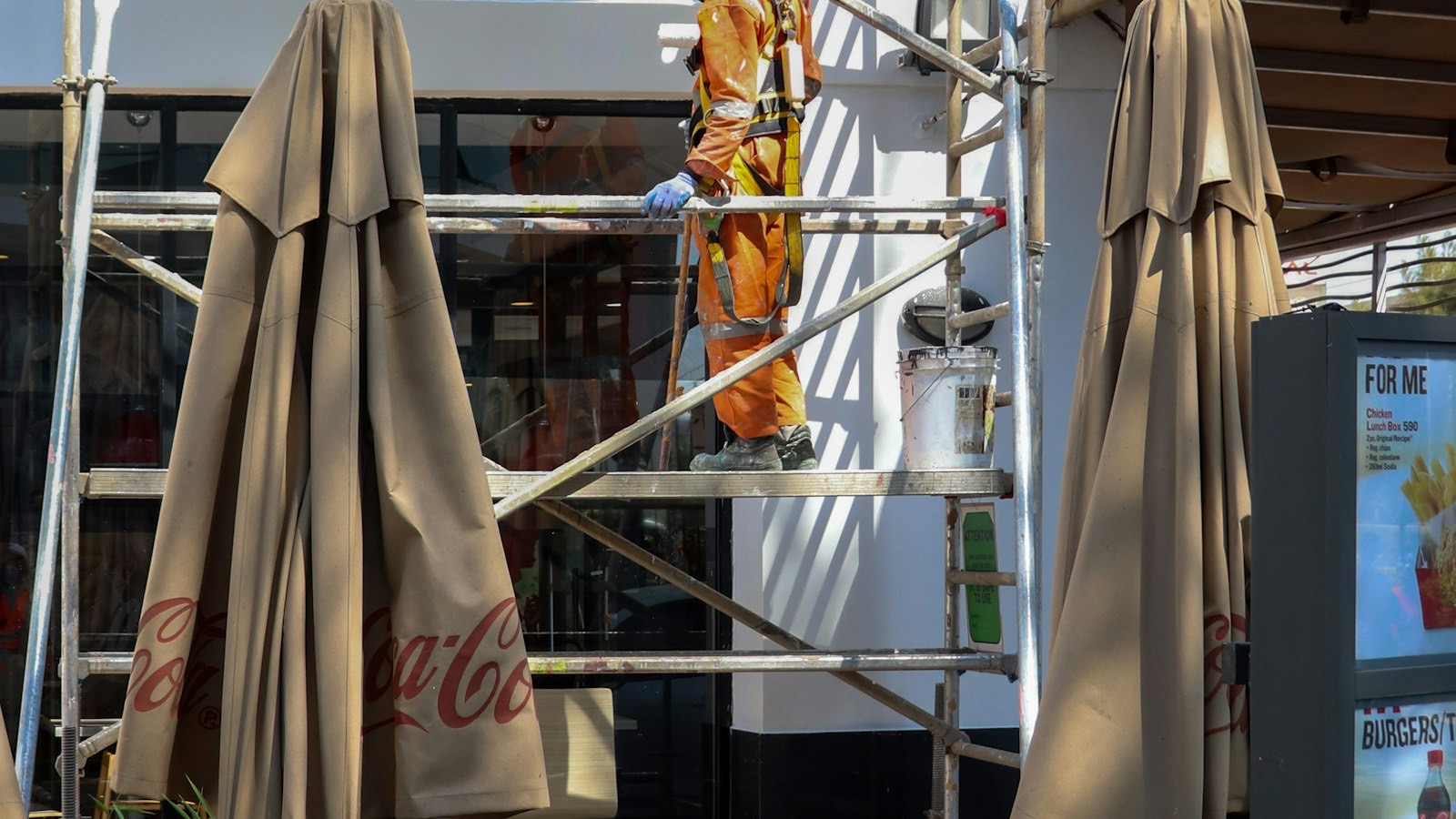
- Painting — exteriors, eaves, fascia and the garage door while access and scaffolding are already there
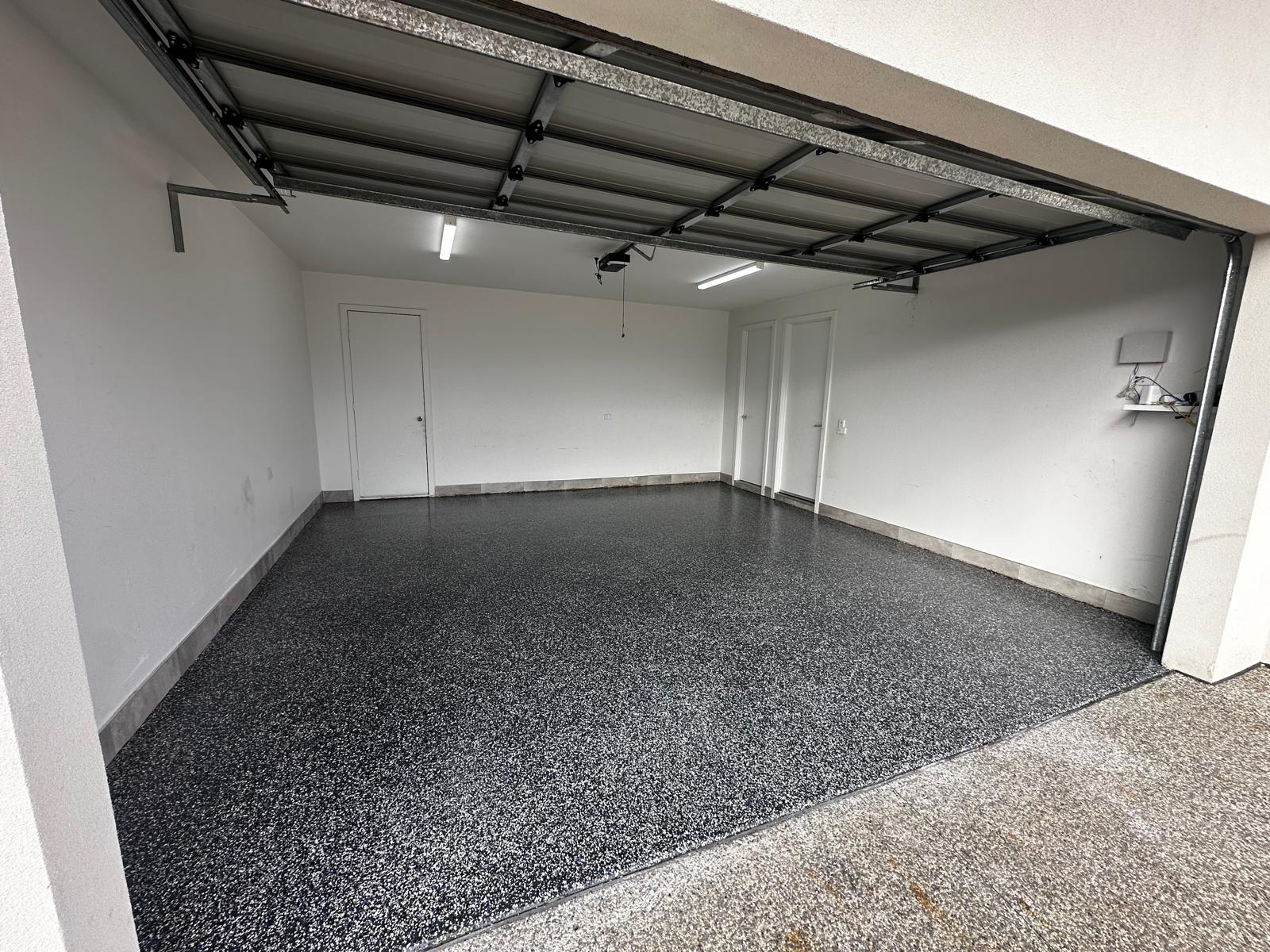
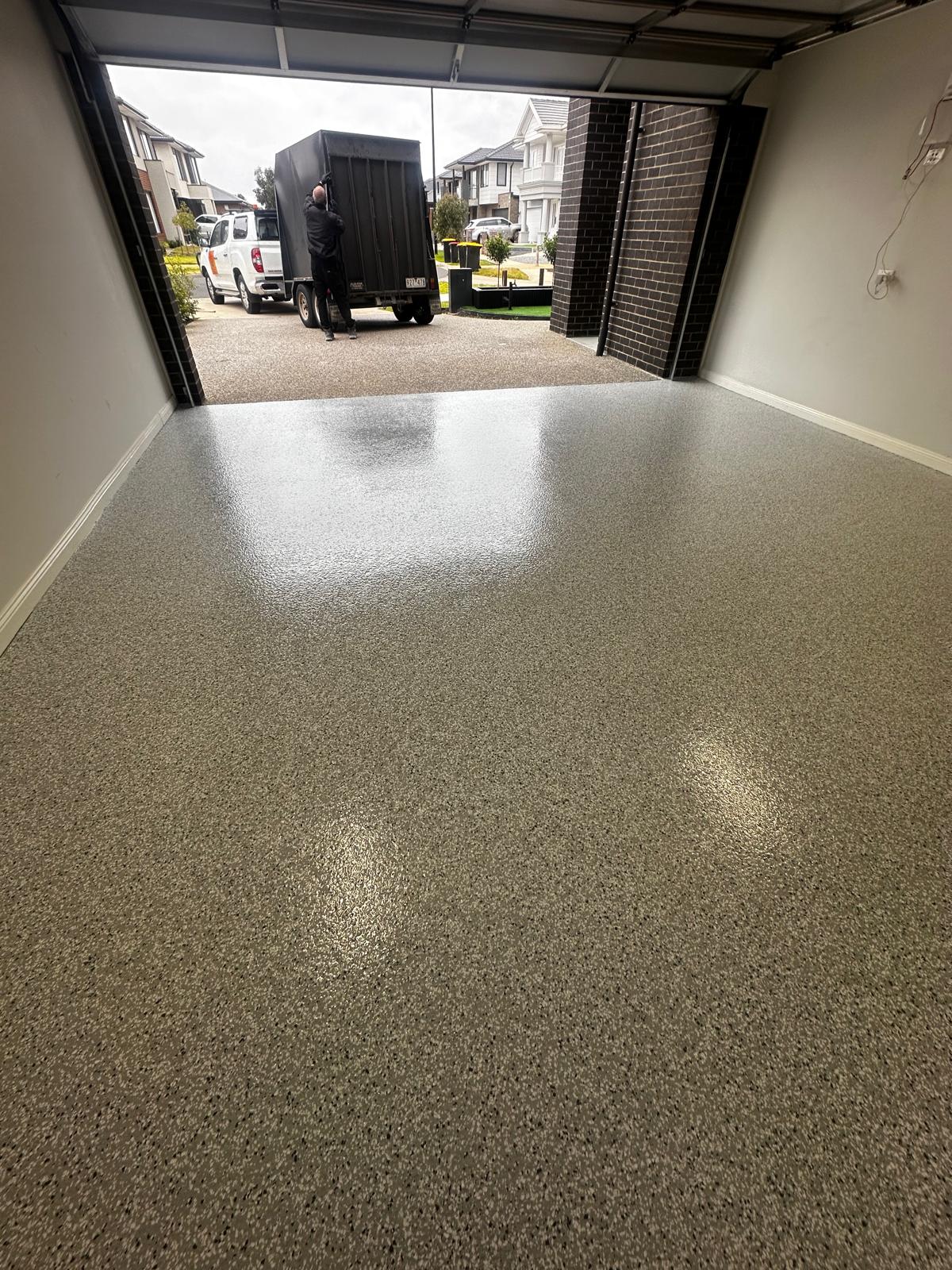
- Epoxy flooring and concrete sealing — garage, alfresco and outdoor floors
The practical benefit is sequencing. Fencing goes in before paving so the posts are not dug through finished surfaces. Drainage goes in before the driveway, not after it. Those are the decisions that save money, and they only happen when one party is planning the whole thing.
Frequently asked questions
What does garden landscaping cost in Melbourne?
Most backyard projects land somewhere between $5,000 and $50,000. A lawn, garden beds and planting refresh sits at the lower end. Add paving, a retaining wall, lighting and irrigation and you are into the middle. A full rebuild with structures reaches the top. We quote after a site visit, because slope, access and drainage move the figure far more than square metres do.
Where should I start if the whole yard needs doing?
Drainage and levels, always. Everything else sits on top of them. Lawn laid over ground that holds water will fail, paving laid on a poorly prepared base will move, and a retaining wall without drainage behind it will lean. Get the ground right first and the rest is straightforward.
Why does my Melbourne garden waterlog in winter?
Usually reactive clay. Clay soil holds water rather than letting it drain through, so after sustained rain it sits. The fix is a combination of correcting falls so water runs away, installing drainage where it collects, and improving the soil in planting areas rather than fighting it.
What is reactive clay and why does it matter in a garden?
Reactive clay swells when wet and shrinks when dry, so the ground moves with the seasons. In a garden it shows up as paving that lifts, retaining walls that lean, cracked paths and beds that waterlog. It is manageable, but it has to be designed for rather than discovered afterwards.
Do I need a permit for landscaping?
For planting, lawn, garden beds and paving at ground level, generally not. Retaining walls above a certain height, structures, decks over a certain height, and anything in a heritage overlay or affecting drainage or boundaries can be different. We flag anything that needs checking at the quote.
How long does a backyard project take?
A lawn and planting refresh might be a few days. A project with excavation, drainage, retaining and paving typically runs one to three weeks on site depending on scale and weather. The quote includes a staged programme rather than a single number.
What is the best time of year to landscape in Melbourne?
Autumn and spring. Soil is workable, turf establishes well, and planting has time to settle before summer stress or winter waterlogging. Summer works but new turf and plants need far more water. Winter is possible for hard landscaping, though wet ground slows excavation.
Should I lay turf or use synthetic grass?
Turf is cooler underfoot, better for soil and drainage, and cheaper to install, but needs mowing and water. Synthetic suits deep shade where nothing grows, small courtyards, and households that want zero maintenance. It gets hot in direct summer sun, which is worth knowing before committing.
What type of retaining wall should I use?
It depends on height, load and look. Timber sleepers suit low garden walls. Concrete sleepers handle more height and last longer. Concrete block and stone suit higher or more visible walls. Above about a metre, engineering input is normal and sometimes required.
Why do retaining walls lean?
Water pressure behind them. A wall holding back saturated soil is holding back enormous weight. Drainage behind the wall — aggregate and an ag line taking water away — is what prevents it, and it is the part most often skipped because nobody can see it afterwards.
What paving suits Melbourne conditions?
Concrete pavers, bluestone and porcelain all perform well. The more important decision is the base underneath. Paving laid on an inadequate base will move regardless of how good the paver is, which is the same principle that governs the floors we coat.
Can you work with a sloping block?
Yes, and much of Melbourne is sloping. Slopes are handled with terracing, retaining, steps and considered drainage. A slope is a design opportunity more than a problem — it is only trouble when someone tries to ignore it.
Do you install irrigation?
Yes. Drip lines to garden beds and pop-ups to lawn, on a controller. In Melbourne summers it is the difference between a garden that survives January and one that gets replaced.
What plants work best in Melbourne gardens?
Species chosen for the aspect and the soil rather than from a catalogue. North-facing beds take sun-hardy planting; south-facing shaded areas need something else entirely. Natives and Mediterranean species generally handle our dry summers with far less water.
How much maintenance will the garden need?
That is a design decision, and worth stating up front. A low-maintenance garden uses mulched beds, hardy species, irrigation and more hard landscaping. A high-detail garden looks better and needs regular attention. Both are valid — mismatching the design to your available time is what causes regret.
Can you do the driveway and paths at the same time?
Yes, and it usually saves money. Because we also do concreting, driveways, paths and slabs run as part of the same project rather than being coordinated between separate trades with separate mobilisations.
Can you do fencing as part of the landscaping?
Yes. Boundary fencing, screens and gates are commonly part of a backyard project, and doing them with the landscaping means the levels and the fence line are planned together rather than one working around the other.
Do you remove the old garden and dispose of it?
Yes — demolition, excavation and removal of spoil and green waste are itemised in the quote rather than assumed.
Which suburbs do you cover?
All of Melbourne. We are based in Mickleham and work across the northern, western, eastern and south-eastern suburbs.
How do we get started?
A site visit. We walk the space, talk about how you want to use it and what the budget is, then come back with a plan and a fixed written quote. No charge and no obligation.
Start with a site visit
We walk the space with you, look at where the water goes, check the levels and the access, and talk about how you actually want to use the garden — not just how it should look in a photo.
You get a plan and a fixed written quote with a staged programme. The visit is free and there is no obligation, and if the honest answer is that your budget is better spent on drainage than on planting, we will say so.
Call 0451 980 606 or book a free on-site consultation.
More: landscaping services in Melbourne, concreting, fencing, residential painting, hybrid flooring.
See our work
- Google Business Profile — reviews and completed jobs
- Facebook — recent projects
- Instagram — work in progress
Planning an epoxy floor in Melbourne?
Book a free on-site inspection and get a fixed written quote — no obligation.