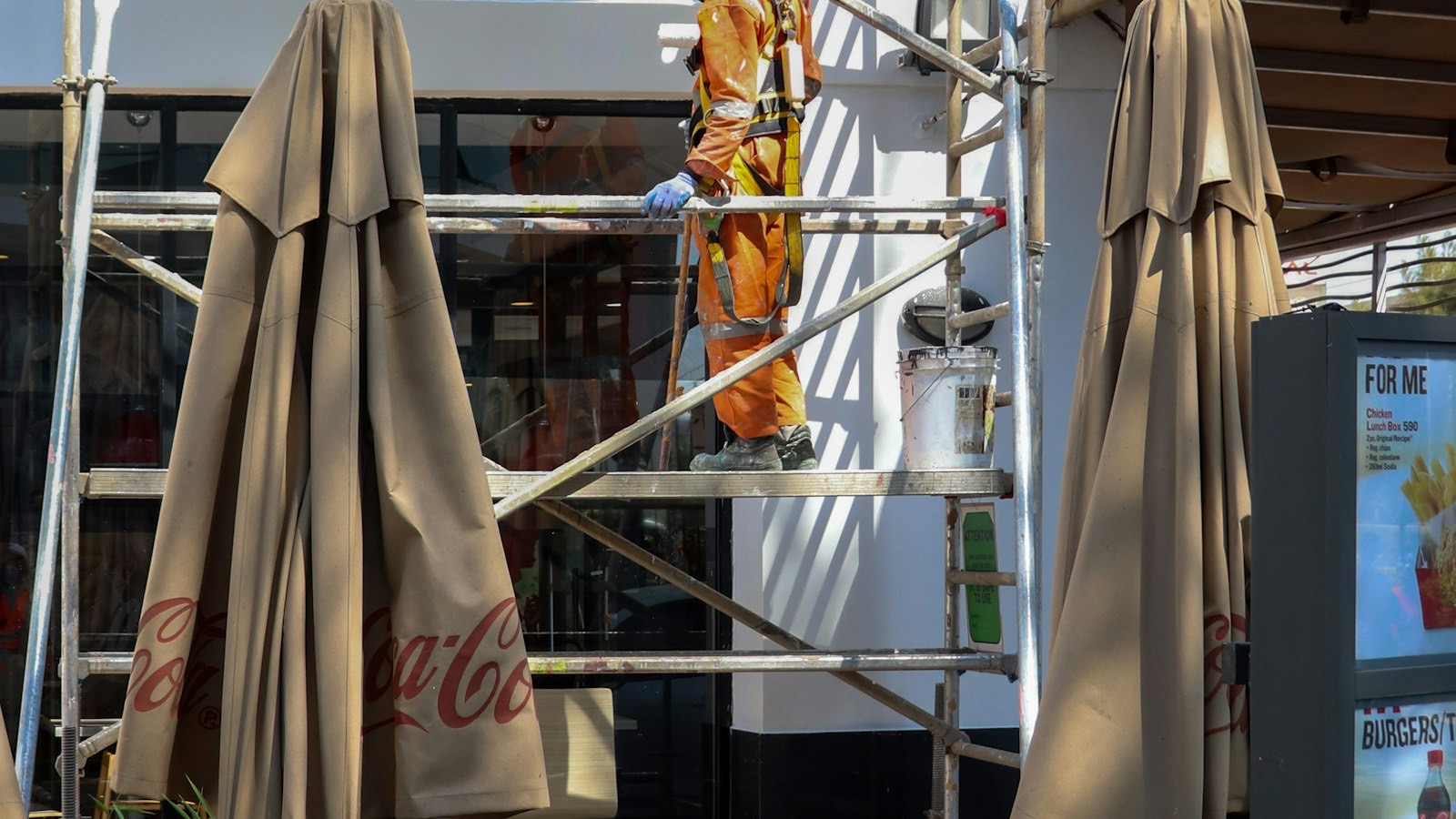
If your commercial space needs both painting and a new epoxy floor, the single most expensive decision you can make is hiring two contractors. Not because of their rates — because of the second shutdown.
The short answer
Floor preparation first, then paint, then the floor coating last. Grinding and patching happen early while mess does not matter, walls are painted next, and the resin floor goes down last so it is pristine at handover. Painting above a finished epoxy floor risks overspray and damage on a surface that cannot be spot-repaired invisibly.
The order matters more than people expect
Commercial fitouts and refurbishments regularly involve both trades, and the sequence is not obvious until you have watched it go wrong. Most commercial painters in Melbourne quote walls and leave the floor to someone else, which is where the programme starts to unravel.
Paint over a finished epoxy floor and you are working above a surface that shows every drip, cannot be spot-repaired without a visible patch, and will be scuffed by ladders and trestles. Resin floors are hard-wearing in service and vulnerable during a fitout.
Coat a floor before the walls are painted and you have to mask the entire floor, protect it for the duration, and accept the risk anyway.
The sequence that works:
| Stage | Work | Why here |
|---|---|---|
| 1 | Epoxy floor preparation — grinding, patching, crack repair | Dust and mess do not matter yet |
| 2 | Wall preparation and painting | Done above a bare slab, nothing to damage |
| 3 | Epoxy floor coating — primer, build, topcoat | Last, so it is pristine at handover |
| 4 | Line marking, signage, final fit | After the floor has cured |
Obvious written down. It is the thing that falls apart when a painter and a flooring contractor are each quoted separately and each assume the other will work around them.
Where the real cost sits
Business owners comparing quotes tend to compare trade rates. That is the smallest number in the equation.
Running the two separately usually means:
- Two mobilisations — setup, protection and site establishment twice
- Two access arrangements — keys, inductions, after-hours security twice
- Two programmes that have to be coordinated by you
- Two periods of disruption, often weeks apart
- Nobody owning the overlap when something clashes
For most businesses the lost trading or halted production across two shutdowns dwarfs any difference in rates. A commercial painting job and an epoxy flooring job each carry that overhead once. Run them together and you carry it once in total. It is the same arithmetic we set out in what commercial painting costs and how to avoid closing and in how long a commercial epoxy floor puts your business out of action — and it compounds when there are two trades.
What a combined scope covers
Painting
Office and warehouse painting covers walls, ceilings, structural steel, plant rooms, amenities and exteriors. Substrate drives the system — plasterboard, render, concrete panel, blockwork and steelwork each need different products, and an interior wall paint pushed onto a warehouse wall is a false economy. Full detail on commercial painting services.
Flooring
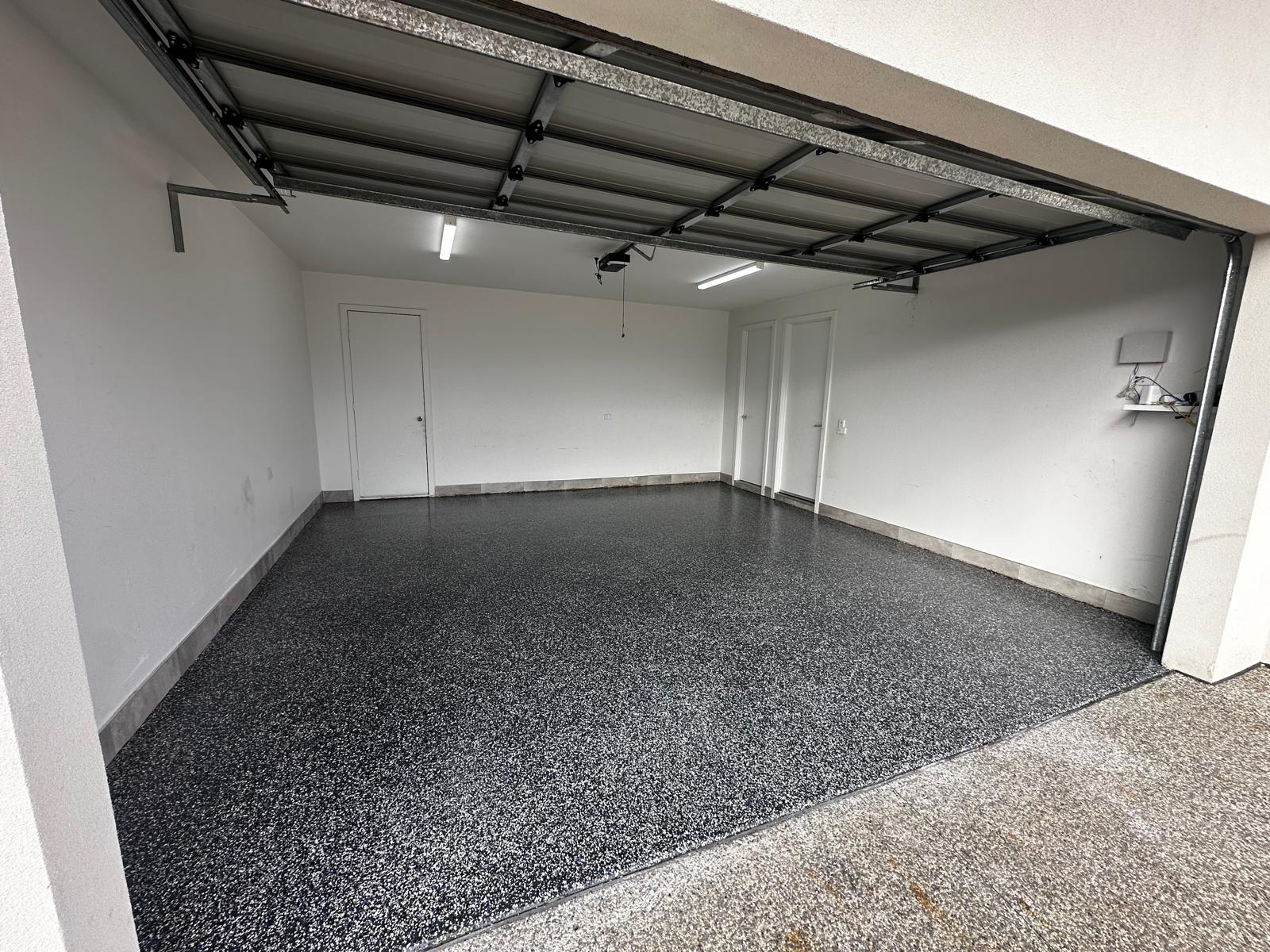
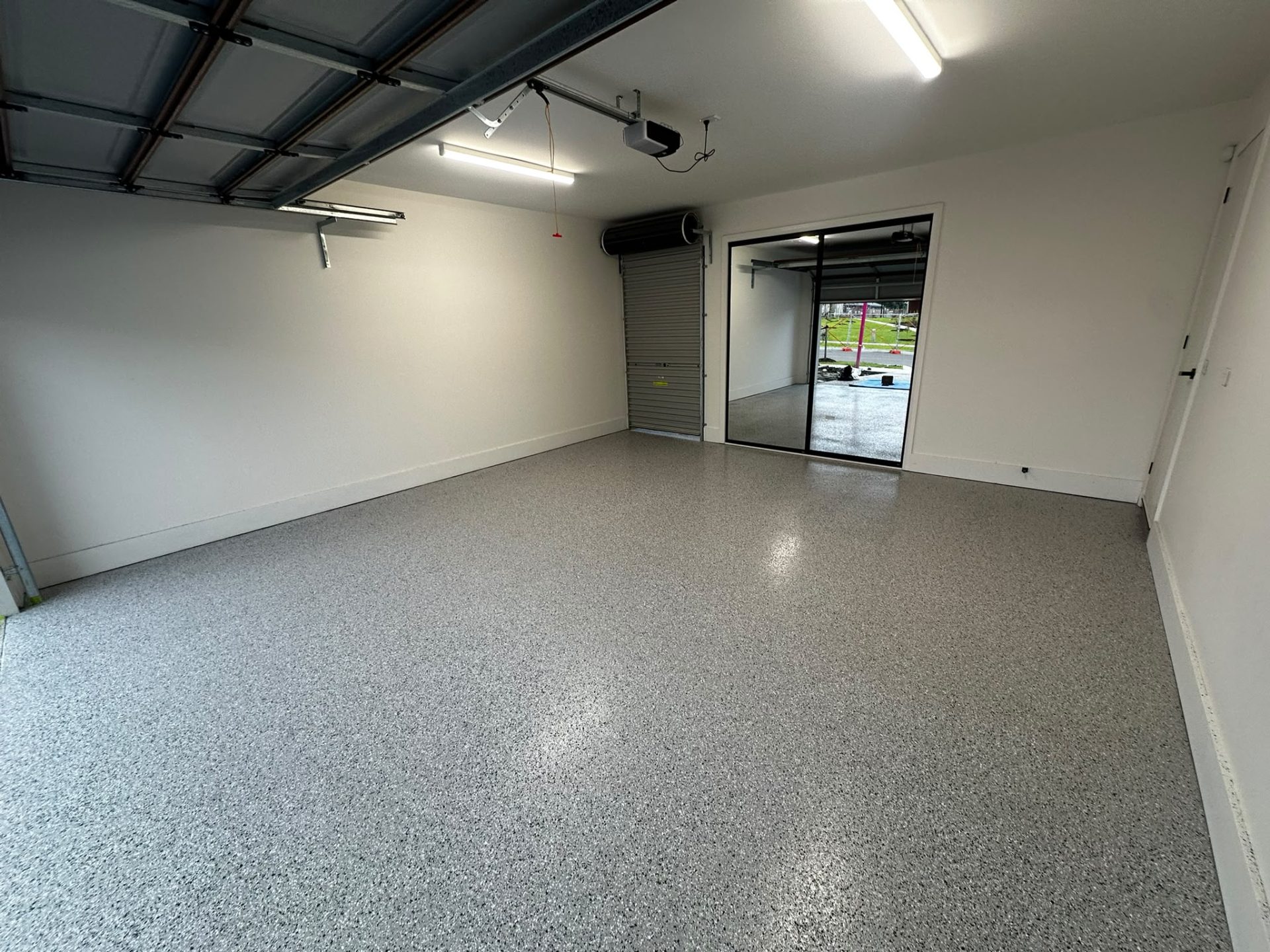
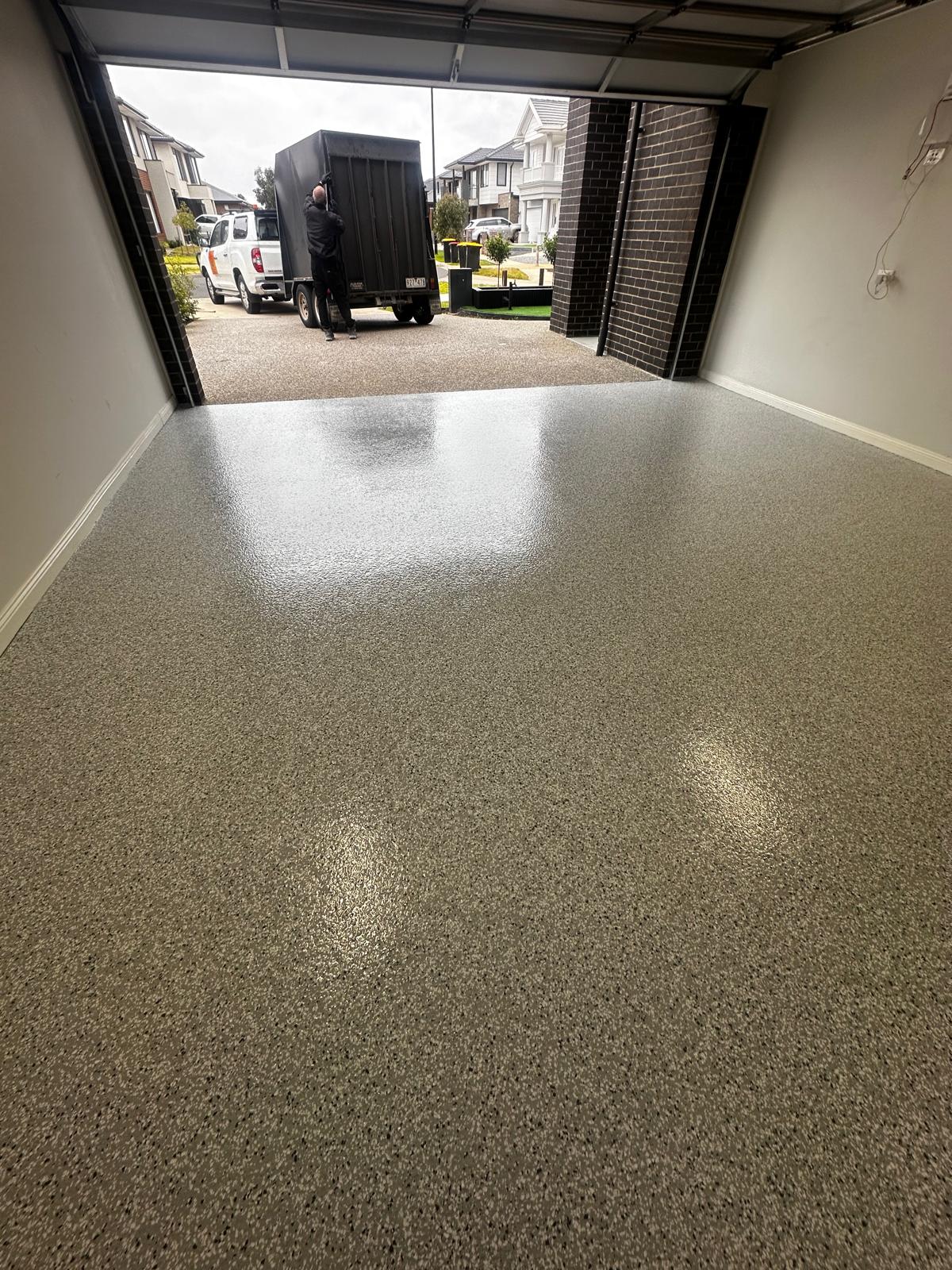
Epoxy flooring starts with diamond grinding or shot blasting, moisture testing and crack and joint repair, then the epoxy system is matched to the duty — warehouse, factory, retail or general commercial. Specification depends on traffic, chemicals and load, covered in can epoxy flooring handle forklifts and heavy machinery.
The junction between them
This is where single-contractor projects pay off, and it is easy to overlook.
Coving — where the floor finish curves up the wall in a continuous radius instead of meeting it at a right angle — sits exactly at the boundary between the two trades. It matters in kitchens, food production and clinical spaces because that 90-degree junction traps fluid and debris. It also determines where the wall finish starts. Two contractors will each assume the other is handling it.
Same with skirting, plinths, door thresholds and the line where a floor coating stops. All of them are handover details, and all of them are where separately-quoted jobs look unfinished.
By sector
Warehouses and distribution
Warehouse painting covers the walls and structural steel, then the warehouse epoxy flooring is coated and line marked. Usually staged bay by bay so operations continue. Re-marking is a good moment to review the WHS layout rather than copying the old lines.
Retail and showrooms
Almost always after hours. Floor preparation one night, painting across several, the epoxy coating over a weekend so the space opens on a finished surface.
Offices
Staged floor by floor. Low-VOC office painting systems let staff remain in the building while adjacent areas are done.
Hospitality and food
Scheduled closures. Coving is usually required, surfaces have to tolerate washdown, and the epoxy must be genuinely cured before food service resumes. See restaurant and commercial kitchen flooring.
Workshops and service centres
Factory and workshop painting is staged across bays so vehicle work continues. Hoist bases coated around in epoxy, walls painted in a system that tolerates knocks and cleaning.
Occupied buildings
Most of this work happens in buildings that cannot close, which makes product choice part of the specification rather than an upgrade.
Low-VOC, low-odour paint systems allow staff and customers to stay while adjacent zones are painted. On the flooring side, epoxy system selection accounts for odour and cure time where occupancy continues. Dust is controlled with industrial extraction coupled to the grinder — in a live building that is a requirement, not a courtesy.
What to ask for in a quote
- A single staged programme covering both trades, by zone
- The sequence stated — which trade is in which area, when
- Return-to-service times per area, not one total duration
- Painting and flooring itemised separately, so you can still compare each
- Substrates and systems named, both walls and floor
- Who owns the junction details — coving, skirting, thresholds
- Documentation — insurance, SWMS, data sheets, inductions
A quote that prices walls and floors as two unrelated numbers with no programme has not thought about the interaction, which is the entire reason for combining them.
Why both trades fail the same way
There is a reason one company does both of these credibly.
Paint fails when it is applied over a surface that was not washed, filled, sanded or primed. Epoxy floors fail when they are applied over a slab that was not ground, tested or repaired. In each case the coating is fine and the preparation was not — and in each case the failure shows up a year or two later, long after the cheap quote looked like a good decision.
It is the same discipline applied to a vertical surface and a horizontal one. The reasoning is set out at length in why factory floors fail and diamond grinding vs acid etching, and it applies to a wall just as directly.
Beyond walls and floors
Where a refurbishment extends outside, the same single-programme logic applies:
- Concreting — hardstand, loading areas, paths and slabs
- Fencing — boundary and security fencing
- Landscaping — frontages, drainage and car park surrounds
- Concrete resurfacing — where a slab is too far gone to coat
Frequently asked questions
Should the walls be painted before or after the floor is coated?
Walls first, floor last, in almost every case. Painting above a finished resin floor risks overspray, drips and ladder damage on a surface that cannot be spot-repaired invisibly. Coating the floor last means it is the newest thing in the room when you hand over.
Why use one contractor for commercial painting and epoxy flooring?
Because the saving is in the shutdown, not the trade rates. Two contractors means two mobilisations, two sets of site access, two programmes to coordinate and usually two periods where the space is out of use. One contractor sequences it as a single programme.
How much downtime does a combined fitout need?
Less than doing them separately. Most commercial spaces can be staged zone by zone or run after hours, and when one party controls both trades the painting and the floor preparation can overlap in different zones rather than queuing behind each other.
Can painting and floor coating happen at the same time?
In the same building, yes — in different zones. Not in the same room at the same time. Grinding dust and wet paint are a poor combination, and resin coatings need a clean substrate, so the two are sequenced within each area even when they run concurrently across a site.
Does grinding the floor damage freshly painted walls?
Not when it is planned. Grinding is done before the final coats go on, or walls are masked and protected where the sequence requires it. This is exactly the kind of clash that happens when two contractors each assume the other will work around them.
What is coving and do I need it?
Coving curves the floor finish up the wall in a continuous radius rather than meeting it at a 90-degree junction. It matters in kitchens, food areas and clinical spaces where that junction collects fluid. It also has to be coordinated with the wall finish, which is easier with one contractor.
Which comes first in a retail fitout — floor or paint?
Usually floor preparation, then paint, then floor coating. The grinding and any patching happen early while mess does not matter, walls are painted, and the resin floor goes down last so it is pristine at handover.
Can you do line marking as part of the job?
Yes. Warehouse line marking and safety colours are applied after the floor coating has cured, and it is a sensible moment to review the layout rather than reproducing the old lines.
Do you use low-odour products in occupied buildings?
Yes. Low-VOC paint systems let staff stay in the building while adjacent areas are painted, and resin systems are chosen with odour and cure time in mind where occupancy continues alongside the work.
What does a combined quote look like?
One scope, one programme, one price, with painting and flooring itemised separately so you can see both. The programme is staged by zone with return-to-service times, rather than a single total duration.
Is it cheaper than hiring two contractors?
Usually, and the saving is mostly in mobilisation and lost trading rather than in rates. One set of site setups, one access arrangement, one induction process, and a single period of disruption instead of two.
What surfaces do you paint in a commercial fitout?
Plasterboard, render, concrete panel, blockwork, brick and steelwork, each with the appropriate system. Industrial substrates need different products from an office wall, which is a specification decision rather than a preference.
Will the epoxy floor handle forklifts after the fitout?
If it is specified for them. A floor suitable for a showroom is not suitable for a distribution centre, so traffic type and load are established before the system is chosen.
How long before we can use the space?
Paint is generally touch dry within hours and fully cured in days. Resin floors need longer — typically foot traffic at 24 hours and vehicles at 72, with faster options where downtime is expensive. The programme states both per area.
Do you work after hours and weekends?
Yes, and for retail and hospitality it is usually the default. A combined programme can run nights for the painting and a weekend for the floor, or stage both across zones.
What documentation do you provide?
Public liability certificate, SWMS, product and safety data sheets, plus site induction completion. For strata and managed buildings we supply what the manager needs for approval.
Can you handle a whole-of-building refurbishment?
Yes — walls, floors, line marking and the exterior, plus concreting and landscaping where the project extends outside. The point of a single contractor is that the sequence is planned rather than negotiated between trades.
What if the floor is in poor condition?
It is assessed before anything is quoted — moisture tested, checked for existing coatings, contamination and cracking. A badly deteriorated slab may need resurfacing before a coating is worth applying, and we would tell you that at the quote.
Which areas of Melbourne do you cover?
All of them, from our base in Mickleham, including the commercial and industrial precincts in Dandenong, Truganina, Thomastown, Broadmeadows, Campbellfield and Laverton.
How do we get a price?
A site walk. We look at the walls, the floor, the access and the trading hours, then come back with a single scope and a staged programme. No charge, no obligation.
One contractor, one programme
We walk the site, look at the walls and the floor together, and come back with a single scope, a staged programme and a fixed price — with the commercial painting and the epoxy flooring itemised so you can see both.
We are based in Mickleham and work across Melbourne, including the commercial precincts in Dandenong, Truganina, Thomastown, Broadmeadows, Campbellfield and Laverton. The site visit is free and carries no obligation.
Call 0451 980 606 or book a free site assessment.
More: commercial painting services, commercial epoxy flooring, warehouse flooring, factory flooring, residential painting.
See our work
- Google Business Profile — reviews and completed jobs
- Facebook — recent projects
- Instagram — work in progress
Planning an epoxy floor in Melbourne?
Book a free on-site inspection and get a fixed written quote — no obligation.