The first question every business owner asks about painting is not what it costs. It is whether they have to close. Here is the honest answer to both — and why the two are more connected than they look.
The short answer
Most businesses do not need to close. Commercial painting is staged zone by zone, run after hours, or scheduled across a weekend. And cost is driven by access and working height first, then surface condition, then hours — not primarily by wall area. Two buildings with the same square metreage can be very different jobs.
Why commercial painting is priced differently to a house
Painting a 200m² office and painting a 200m² house are not the same job, even though the paint and the wall area are identical.
In a house, the painter arrives at eight, works until four, and the only constraint is where the furniture goes. In a commercial building, five other things are in play before a brush is opened:
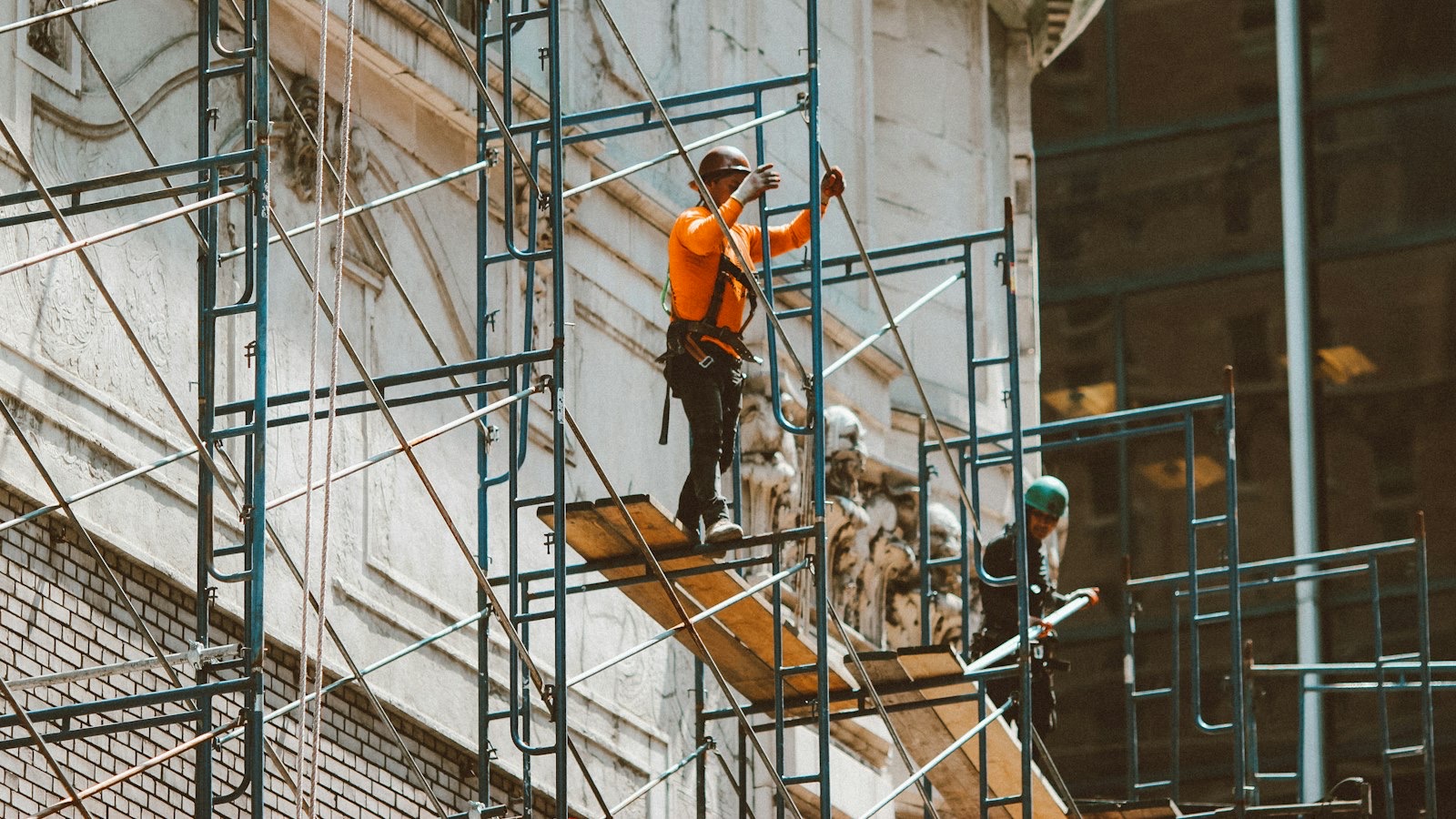
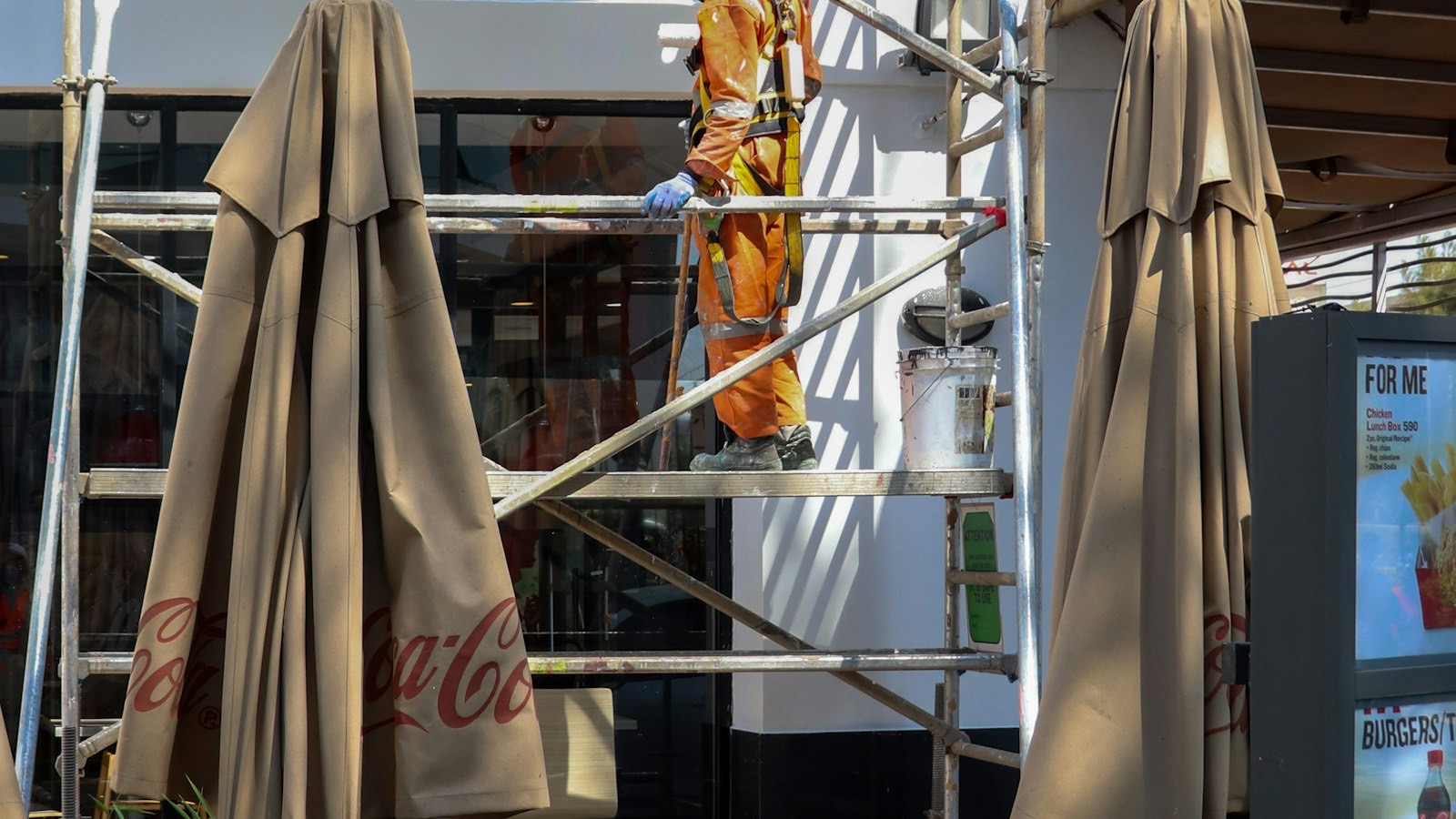
- Access and height. Anything above about three metres needs scaffold, a scissor lift or a boom. That changes the equipment, the licences, the day rate and the duration.
- Hours. Work after close or over a weekend carries a premium.
- Staging. A job done in six zones costs more in mobilisation than the same job done in one hit.
- Compliance. SWMS, inductions, insurance documentation, working-at-height requirements.
- Product. Occupied buildings need low-odour systems; industrial substrates need specific coatings rather than whatever suits a lounge room.
Which is why a per-square-metre rate given over the phone tells you almost nothing about a commercial building.
What actually drives the cost
| Factor | Effect on price |
|---|---|
| Working height and access | Largest single variable — scaffold and lifts change everything |
| Surface condition | Failed previous coating, rust, mould or damaged render adds preparation |
| Hours of work | After-hours and weekend premiums |
| Number of stages | More zones means more mobilisations |
| Substrate and system | Render, concrete panel, steelwork and plasterboard each need different products |
| Wall area | Matters, but far less than most people assume |
The practical consequence: get the access conversation out of the way early. If a quote does not mention how the high work is being reached, it has not been priced properly and the number will move.
The four ways to avoid closing
After hours
The default for retail and hospitality. Crews start after close and are off site before open, with each night finished to a usable state rather than left mid-job. The space trades normally every day.
Weekends
Friday evening to Monday morning gives roughly 60 hours — enough for most single-space commercial interiors including drying time. Suits offices, showrooms, clinics and anywhere already closed Saturday and Sunday.
Staged zones
The workhorse for larger floor plates and warehouses. One zone is prepared, painted and handed back before the next begins. Total elapsed time goes up; trading never stops.
Planned shutdown
For manufacturing and food production, usually scheduled into an existing shutdown — Christmas, Easter, or a maintenance window. Most efficient option when you already have one.
The calculation most buyers never do
After-hours work costs more per hour. Closing costs more per day.
Before comparing two quotes, work out what a day of your operation is actually worth — trade, production, staff sitting idle. Then compare that against the after-hours premium. For most businesses the premium is a fraction of a single lost day, which means the more expensive quote is frequently the cheaper outcome.
It is the same arithmetic we set out for flooring in how long a commercial epoxy floor puts your business out of action, and it works the same way for paint.
Painting an occupied building
The thing that makes this workable is product choice, not scheduling tricks.
Modern water-based commercial systems are low-VOC and low-odour, which is what allows staff and customers to remain in a building while an adjacent area is painted. On an occupied site that is part of the specification from the start — not an upgrade offered later when someone complains about the smell.
The other half is containment and tidiness: areas sheeted and separated, access routes kept clear, and each zone cleaned and reopened rather than left under drop sheets for a week.
By sector
Offices
Staged floor by floor or wing by wing, often across evenings. Furniture moved and protected, each area returned to use before the next starts. Ceilings and partitions usually the slowest part.
Retail and showrooms
After hours, almost always. Fixtures and stock protected, and the space trading normally the next morning.
Warehouses and factories
Staged by bay, with height the main variable. Racking either moved or coated around, and line marking reinstated after cure. See warehouse and factory work.
Hospitality
Scheduled closures or overnight runs, with surfaces and products chosen for washdown and heavy contact.
Strata and owners corporations
Common areas, corridors, stairwells, car parks and exteriors. These are quoted through a manager or committee, which means the documentation matters as much as the price — insurance, SWMS, programme and a clear scope they can approve in a meeting.
What a commercial quote should contain
- Access method for all high work, named
- Surface preparation itemised per substrate
- Products by name, with the number of coats
- Delivery model — after hours, weekend, staged or shutdown
- A zone-by-zone programme with return-to-use times
- Documentation — public liability, SWMS, data sheets
- What counts as a variation, and how it is communicated
A quote that is a rate, a total and a rough duration has not engaged with your building. The wider question set is in how to choose a painting service provider.
Why previous jobs fail
If you are repainting earlier than expected, the cause is almost never the paint.
It is paint applied over a glossy surface that was not sanded, over dust or grease, over an unprimed patch, or onto a damp exterior wall. It is two coats quoted and one delivered. It is an interior product used outdoors. Every one of those is a preparation or specification decision, made before the first coat.
That is the same argument we make about floor coatings in why factory floors fail — the coating is rarely the problem, and the invisible stage decides the result.
Frequently asked questions
Can you paint our building without closing?
Almost always, yes. Commercial painting is normally staged zone by zone, run after hours, or scheduled across a weekend so the business keeps trading. A full closure is the exception rather than the rule, and usually only where the whole floor plate has to be done at once.
Why is commercial painting quoted differently to a house?
Because the painting is the predictable part. What varies is access, working height, hours of work, the compliance documentation required, and how the job has to be staged around your operation. Two buildings with identical wall area can be very different jobs.
What drives the cost of a commercial paint job?
Access and height first, then surface condition, then hours. Work above three metres needs scaffold, a scissor lift or a boom, and that changes both the day rate and the duration. After-hours work carries a premium. Wall area matters far less than people expect.
Do you charge more for after-hours work?
There is a premium, and it is usually smaller than a day of lost trade. We quote both options where it is practical so you can compare the painting premium against what closing would actually cost you.
Will the smell be a problem for staff and customers?
Not with the right products. Low-VOC and low-odour water-based systems let people stay in a building while adjacent areas are painted. On occupied sites that choice is part of the specification, not an upgrade.
How much notice do you need?
For anything involving staging, out-of-hours access or multiple zones, three to six weeks is realistic, because the programme has to be built around your operation rather than ours. Single-space jobs can often be sooner.
Can you work around our trading hours?
Yes — that is the normal arrangement for retail and hospitality. We start after close and are off site before you open, with each night finished to a usable state rather than left mid-job.
What about warehouses and factories?
Usually staged bay by bay, or scheduled into an existing shutdown. Height is the main variable, along with whether racking or plant has to be moved or coated around.
Do you paint line markings and safety colours?
Yes. Re-marking is a sensible moment to review your WHS layout rather than simply reproducing the old lines, and markings go on after the coating has cured.
What documentation do you provide?
Public liability certificate, SWMS, product data sheets and safety data sheets as standard, plus whatever your building or facility manager requires. We complete site inductions where the building has them.
Do you handle strata and owners corporation buildings?
Yes. Common areas, corridors, stairwells, car parks and building exteriors. We are used to quoting through a manager or committee and supplying the documentation needed for approval.
How do you handle working at height?
Scaffold, scissor lift or boom depending on the building and the access, with the appropriate licences and a documented safe work method. Height is costed into the quote rather than discovered on site.
Can you paint an occupied office?
Routinely. Work is staged floor by floor or wing by wing, often across evenings, with furniture moved and protected and each area returned to use before the next starts.
What surface preparation happens on a commercial job?
The same principles as any paint job, at scale: washing, filling, caulking, sanding and priming, plus treatment of any mould, rust or previous coating failure. On rendered or concrete surfaces, the right masonry system matters as much as the preparation.
Our previous paint job failed within two years. Why?
Almost always preparation, or the wrong product for the substrate. Paint applied over dust, a glossy unsanded surface, an unprimed patch or a damp exterior wall has nothing to bond to. The brand in the tin is rarely the cause.
Do you paint exteriors of commercial buildings?
Yes — render, concrete panel, brick, cladding and steelwork. Exterior work needs a weather window, which is why it is scheduled rather than squeezed in.
How long does a commercial repaint take?
It depends entirely on area, access and how it is staged. A single office suite might be two to three nights. A multi-level building exterior runs to weeks. The quote should include a schedule, not just a duration.
What happens if something is not right?
Area-by-area sign-off rather than one inspection at the end, so issues are caught while the crew is still in that zone. Paint is one of the easier trades to put right.
Do you work across all of Melbourne?
Yes. We are based in Mickleham and work across the metropolitan area, including the commercial and industrial precincts in Dandenong, Truganina, Thomastown, Broadmeadows, Campbellfield and Laverton.
How do we get a price?
A site visit. We walk the building with you, note access, heights, surfaces and what cannot be disrupted, then issue a fixed written quote with a staged programme attached. No charge, no obligation.
Get a programme, not just a price
We walk the building with you, note the access and heights, check the surfaces, and ask what cannot be disrupted. The quote comes back with a staged programme attached so you can see exactly when each area is out of use and when it comes back.
We are based in Mickleham and work across Melbourne. The site visit is free and carries no obligation.
Call 0451 980 606 or book a free site assessment.
More: commercial painting services, residential painting, commercial epoxy flooring, concreting.
See our work
- Google Business Profile — reviews and completed jobs
- Facebook — recent projects
- Instagram — work in progress
Planning an epoxy floor in Melbourne?
Book a free on-site inspection and get a fixed written quote — no obligation.