Every epoxy flooring contractor in Clyde will tell you they do quality work. The way to find out is to ask how they prepare the slab — and to know what a good answer sounds like.
This is a practical guide to choosing one: what separates a floor that lasts fifteen years from one that peels in two, the seven questions worth asking before you sign anything, what the work should cost in Clyde, and the warning signs that a quote is cheap for a reason.
Why the contractor matters more here than most places
Clyde and Clyde North are new estates, and that shapes what your garage slab needs.
- The concrete is young. New slabs need at least 28 days before coating, and they hold more moisture than an established slab. Moisture moving up through concrete lifts a coating from underneath regardless of how well the surface was prepared.
- The slab is almost certainly sealed. Builders seal garage slabs at handover. It is invisible, and it is exactly what a coating must not bond to. It has to be ground off mechanically.
- The soil is highly reactive. Melbourne's south-east sits on clay that swells and shrinks through the seasons. Slabs move, and hairline cracking follows. Normal, repairable — but only if it is routed out and filled rather than painted over.
A contractor who has worked across these estates knows all three before they arrive. One who has not will quote as though your slab is bare, clean and stable, and then either cut corners or hit you with variations.
The seven questions
1. How will you prepare the slab?
This single question sorts most of the field. A good answer names diamond grinding, mentions dust extraction, and covers what happens if cracks or moisture turn up.
Answers that should slow you down: "we'll clean and etch it" (acid cannot get through a builder's sealer), "we pressure wash first" (washing is not preparation), or "we'll scuff it up" (usually a sander, which does not produce a usable profile). The full comparison is in diamond grinding vs acid etching.
2. Do you test for moisture?
On a Clyde slab this is not optional. The test takes twenty minutes. A high reading means a moisture-barrier primer, which adds about a day and a modest cost. Skipping the test is the most expensive shortcut in the trade, because the floor fails from below and the whole thing has to come off.
3. What happens if you find cracks?
The right answer describes routing them out into a clean channel, filling with a structural repair compound, and grinding flush. If cracks are not mentioned at all in a quote for a new-estate slab, the contractor either has not looked or intends to coat straight over them.
4. How many coats, and what is the topcoat?
A full flake system is four stages: primer, coloured base coat, flake broadcast, clear topcoat. The topcoat should be polyaspartic, which carries the abrasion and UV resistance. A concrete sealer used as a topcoat is a downgrade dressed up as a finish — the reasoning is in why concrete sealers are not suitable for epoxy floors.
5. Is the price fixed?
An estimate can move. A fixed written quote states what is included and what would count as a variation, so there are no conversations halfway through the job about extra cost.
6. Are you insured, and what does the warranty cover?
Public liability cover is the minimum — grinding equipment and a full day of work are happening inside your property. The warranty should be written, should cover peeling and delamination arising from the installation, and should honestly exclude impact damage and driving on the floor before it has cured.
7. Can I see your own work?
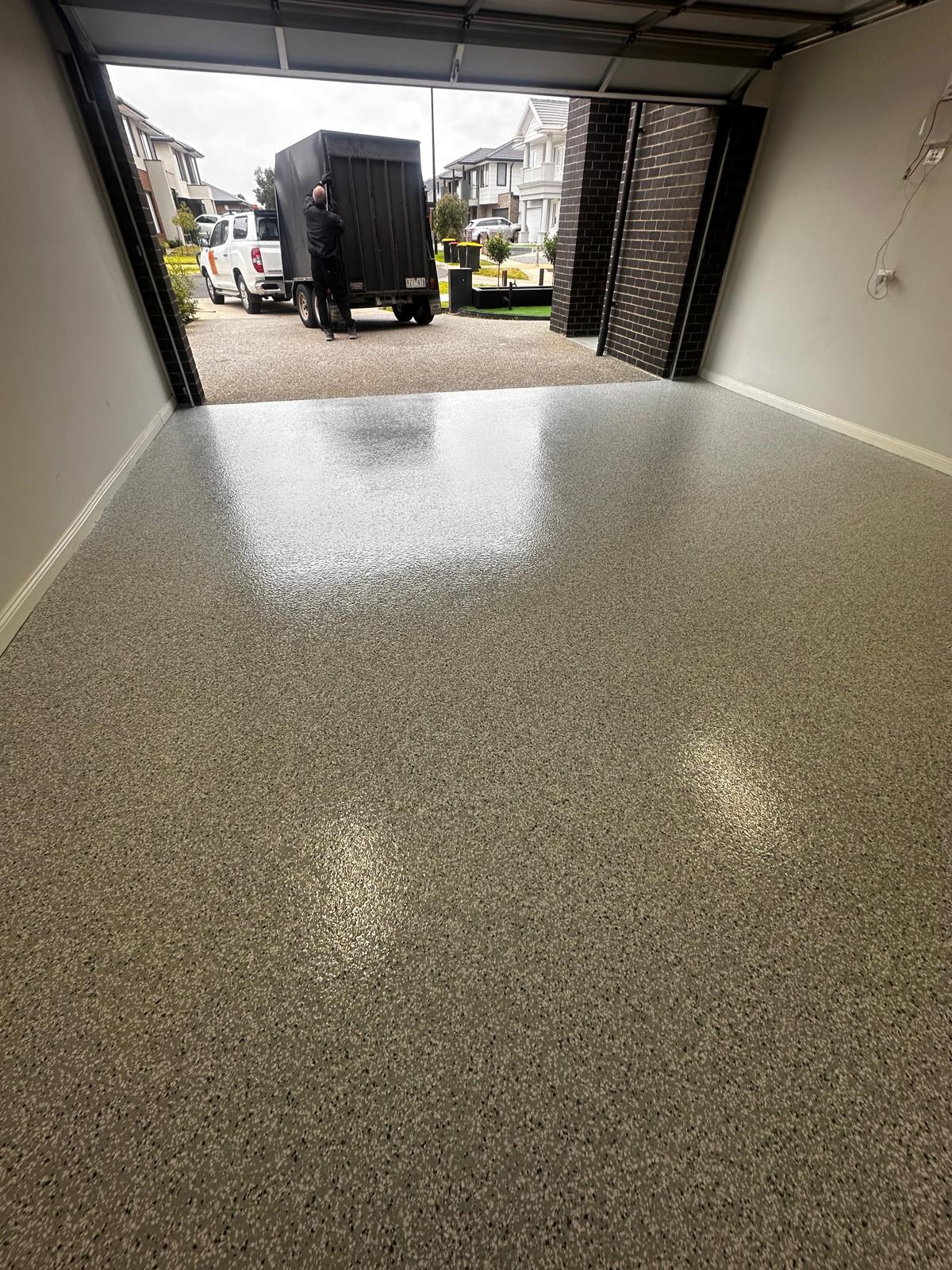
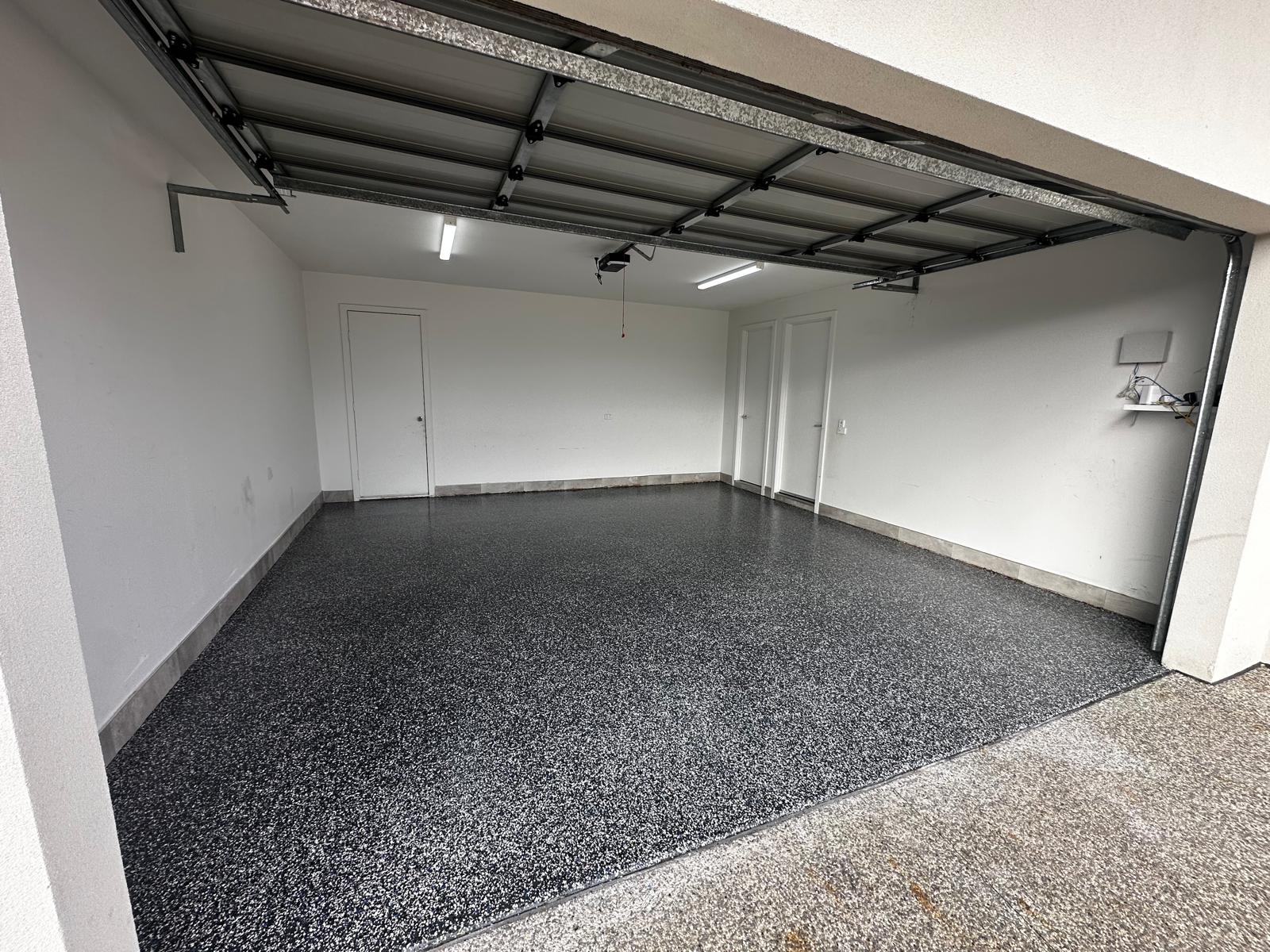
Photographs of real jobs, not supplier stock images. Ask where and when. Someone working locally can name the suburb and describe the slab. Genuine photos usually have the ordinary details in them — a trailer in the driveway, a garage that has not been styled for a shoot.
Happy to answer all seven? Ask us for a quote or call 0451 980 606. We will put the preparation in writing so you can compare it against anyone else's.
What it should cost
| Space | Approx. area | Flake epoxy from |
|---|---|---|
| Single garage | 18 m² | $1,400 |
| Double garage | 36 m² | $2,400 |
| Triple garage | 54 m² | Quoted on measure |
| Alfresco or patio | Varies | Quoted on measure |
Those figures assume the complete system, preparation included. If a quote comes in well under, the honest question is not "why are they cheaper" but "what is not in this price". Detail across every service is in how much epoxy flooring costs in Melbourne, and garage-specific numbers in double garage epoxy flooring cost.
Warning signs
- A one-day full epoxy floor. The primer needs overnight to cure. One day means a coat is missing or the grinding was skipped.
- No mention of grinding anywhere in the quote. The single most reliable indicator of a floor that will fail.
- Pressure to decide today. A discount that expires this afternoon is a sales tactic, not a price.
- No written quote. A number over the phone with nothing on paper leaves you no position at all if something goes wrong.
- No ABN, no insurance certificate, cash only. Self-explanatory.
- Only supplier photos. If they cannot show you their own completed floors, ask why not.
What good looks like once they are on site
Even after you have chosen, the first morning tells you plenty:
- The grinder is coupled to an industrial vacuum. If dust is filling the garage, that dust is going through the internal door into your house.
- Walls are masked to around 300 millimetres before anything starts.
- The slab is tested, not just looked at.
- Cracks are chased open, not filled flush from the top.
- Flake is broadcast to refusal — thrown until the surface takes no more — rather than lightly scattered.
The full two-day sequence, with timings, is in how long epoxy flooring takes start to finish.
Working in Clyde
We are based in Mickleham and install across Melbourne, including Clyde, Clyde North, Cranbourne, Berwick, Officer, Pakenham and Narre Warren. We have been doing it since 2020 and have completed more than 2,000 floors.
Every job is diamond ground with dust extraction — no exceptions, no acid etching, no shortcuts — and the preparation is itemised on the quote rather than assumed. If a slab needs a moisture barrier or has an old coating to strip, that is identified at the measure and priced before we start, not discovered on day one.
You can see the systems we install on flake epoxy flooring and metallic epoxy flooring, garage pricing on double garage epoxy flooring and single garage epoxy flooring, and local detail on epoxy flooring in Clyde.
Frequently asked questions
How do I choose the best epoxy flooring contractor in Clyde?
Judge them on preparation, not price. Ask how they will prepare the slab: the answer should name diamond grinding, mention dust extraction, and cover what happens if cracks or moisture are found. Then check they carry insurance, offer a written warranty, quote a fixed price rather than an estimate, and can show you photographs of their own completed work.
What should a double garage cost in Clyde?
From $2,400 for a standard 36 square metre double garage with a full flake system, and from $1,400 for a single. That should include grinding, crack repair, primer, base coat, full flake broadcast and a polyaspartic topcoat. Quotes well below that have almost always had the preparation removed.
Why are Clyde garage slabs different?
Clyde and Clyde North are new estates, so the concrete is young, almost always sealed by the builder at handover, and sitting on highly reactive clay. That combination means three things every quote should address: the sealer has to be ground off, seasonal hairline cracking has to be filled, and the slab has to be moisture tested before anything is applied.
How long should an epoxy garage floor take?
Two days on site for a standard garage. Anyone promising a complete epoxy system in a single day is either skipping the grinding or skipping a coat, because the primer alone needs overnight to cure.
Should I get more than one quote?
Yes, and compare them on what is included rather than the total. Ask each contractor the same question about slab preparation. When one quote is a thousand dollars cheaper, that gap is nearly always grinding, crack repair or a coat that is missing.
What questions should I ask before signing?
How will you prepare the slab? Do you test for moisture? What happens if you find cracks? How many coats, and what is the topcoat? Is the price fixed or an estimate? What does the warranty cover and for how long? Can I see photos of your own work? A contractor who answers all seven clearly is worth taking seriously.
Is the cheapest quote ever the right choice?
Occasionally, if it includes everything the others do. Usually it is cheaper because something has been left out, and the thing left out is almost always preparation. Redoing a failed floor costs more than doing it properly the first time, because the failed coating has to be removed before you start again.
What is diamond grinding and why does it matter?
A weighted machine with diamond tooling abrades the top layer off the concrete, removing the builder's sealer, the weak surface skin and any contamination, and leaving an open texture the coating can grip. Epoxy bonds mechanically, not chemically, so without that texture the coating sits on the surface instead of keying into it.
Is acid etching acceptable instead?
Not on a Clyde estate slab. Acid reacts with cement, so it cannot get through a builder's sealer at all, and it cannot remove oil. It also wets the slab, which then has to dry before coating. Any quote proposing to clean and etch is not offering equivalent preparation.
Do I need a moisture test?
Yes, particularly on newer slabs. Water moving up through concrete will push a coating off from underneath no matter how well the surface was prepared. A test takes twenty minutes. If the reading is high, the answer is a moisture-barrier primer, which adds about a day.
What warranty should I expect?
A written workmanship warranty. It should cover peeling, delamination and coating failure caused by the installation. No honest warranty covers impact damage, chemical spills left sitting, or driving on the floor before the cure times have passed. Be wary of a verbal promise with nothing on paper.
Should the contractor be insured?
Yes. Public liability cover is the minimum, and it matters because grinding equipment, chemicals and a full day of work are happening inside your property. Ask to see the certificate. A contractor who cannot produce one is not one to let into your garage.
How do I know the photos are their own work?
Ask where the job was and when. A contractor working locally can tell you the suburb and describe the slab. Stock photography and images lifted from suppliers are common in this trade — genuine photographs usually include the ordinary details, like a work trailer in the driveway or a garage that is not perfectly styled.
Do I need to be home during the installation?
Not for the whole time, but access is needed for both days and someone should be there at the start so the colour and the layout can be confirmed. Most people go to work and leave access arranged.
How long will a properly installed floor last?
Fifteen years or more in a domestic garage. Floors that fail early almost always failed at preparation, not because the coating wore out.
Can it be installed in winter?
Yes. The two days on site do not change. Cure time stretches in the cold, so the wait before you can park on it goes from about three days to closer to a week. A contractor who quotes identical cure times in July and January has not thought about it.
What areas around Clyde do you service?
Clyde, Clyde North, Cranbourne, Berwick, Officer, Pakenham, Narre Warren and the wider south-east, along with the rest of Melbourne. We are based in Mickleham and work across the metropolitan area.
Do you charge for a quote?
No. The on-site measure is free and carries no obligation. We look at the slab, test it for moisture, talk through colours and leave you with a fixed written price.
How far ahead do you book?
Usually one to three weeks, longer through spring and in the lead-up to Christmas, which is the busiest period. Quotes are generally issued within 48 hours of the visit.
What makes GoPoxy different?
Every floor is diamond ground with dust extraction, without exception, and the preparation is written into the quote so you can see what you are paying for. We have been installing floors across Melbourne since 2020, have completed 2,000 or more, and back the workmanship with a written warranty.
Get a quote you can actually compare
Ask us the seven questions. We will answer all of them, put the preparation in writing, and give you a fixed price after looking at your actual slab — not a number guessed over the phone.
The visit is free and there is no obligation. If another quote comes back cheaper, bring it to us and we will tell you honestly what the difference is.
Planning an epoxy floor in Melbourne?
Book a free on-site inspection and get a fixed written quote — no obligation.