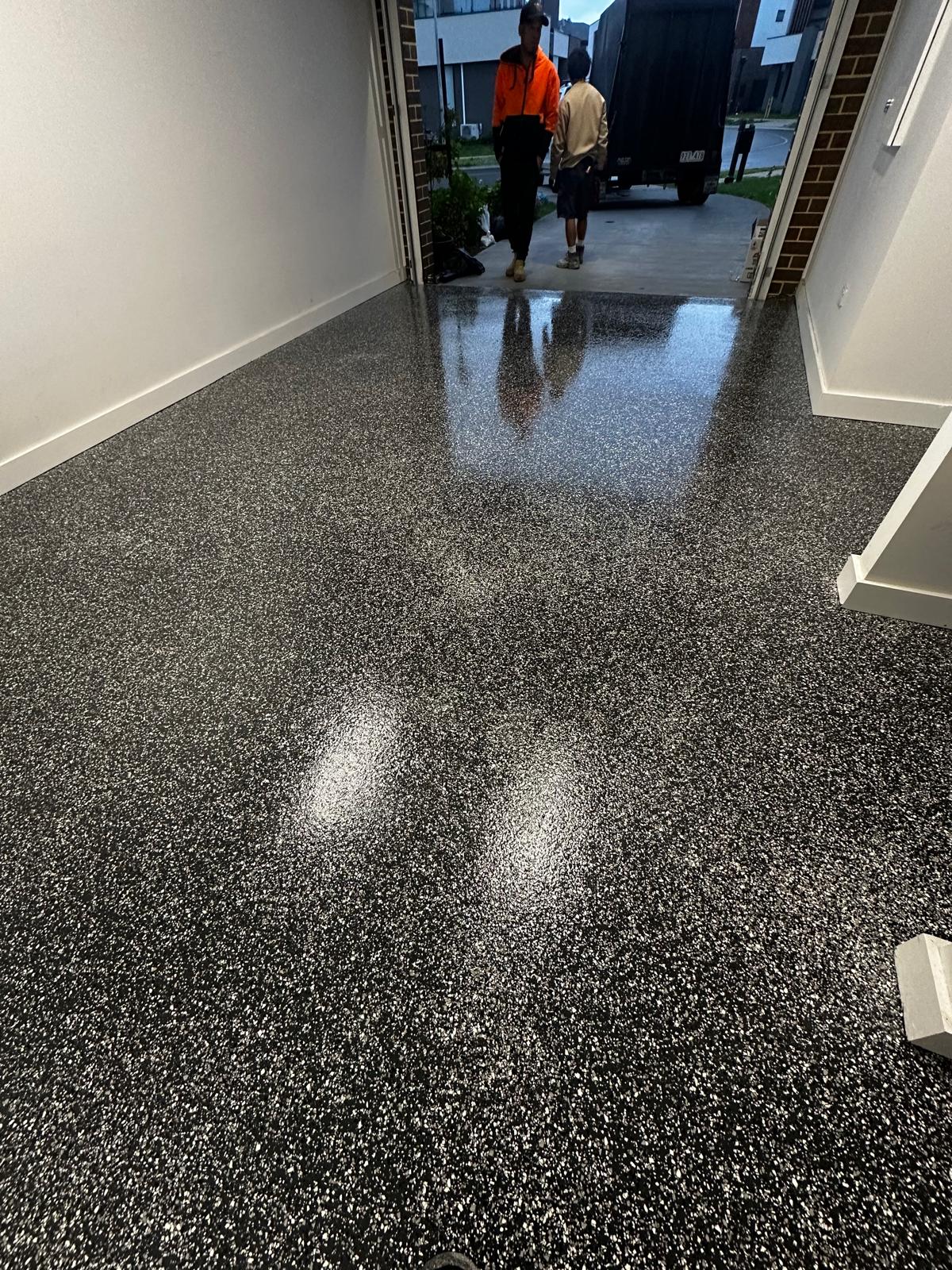
"Garage floor epoxy" is sold by five very different kinds of business, at prices that range from a few hundred dollars to a few thousand. They are not the same service, and the price gap is not a bargain — it is a list of things that have been left out.
This is a guide to who you can actually hire, what a complete service includes, and how to hold two quotes side by side and see where they differ. If you have already decided you want the floor, this is the part worth reading before you book.
The five kinds of provider
1. The DIY kit
A bucket kit from a hardware store, roughly $300 to $600 for a double garage. You supply the labour and hire the grinder — and the grinder is the problem. Hire machines are usually underweighted single-head units that will not remove a builder's sealer properly, and they are rarely paired with adequate dust extraction. Most kits also ship an acid etch sachet instead of a grinding step, which does not work on a sealed slab at all.
Fine for a shed you do not care much about. Not the way to treat a slab you want to keep for fifteen years.
2. The painter or handyman who "also does floors"
Competent trades, wrong speciality. Epoxy is not paint: it bonds mechanically into an opened concrete profile rather than soaking in, so the preparation is the entire job and it needs equipment a painter has no reason to own. Quotes from this group tend to describe cleaning and etching rather than grinding — the difference is set out in diamond grinding vs acid etching.
3. The sole trader with a hired grinder
The most variable group in the market. Some are genuinely good operators building a business. Others hire a machine for the day, take the job, and are difficult to reach afterwards. Because hire is charged by the day, there is real pressure to grind fast and move on — which is exactly where preparation gets thin.
Two questions sort this group quickly: do you own your grinder, and how do you handle a callback?
4. The franchise operator
National branding, a fixed product range and a script. Systems are usually sound and the paperwork is professional. The trade-off is flexibility: an unusual slab, an old coating to strip or a colour outside the range may not fit the model, and the person quoting is often not the person coating.
5. The specialist epoxy installer
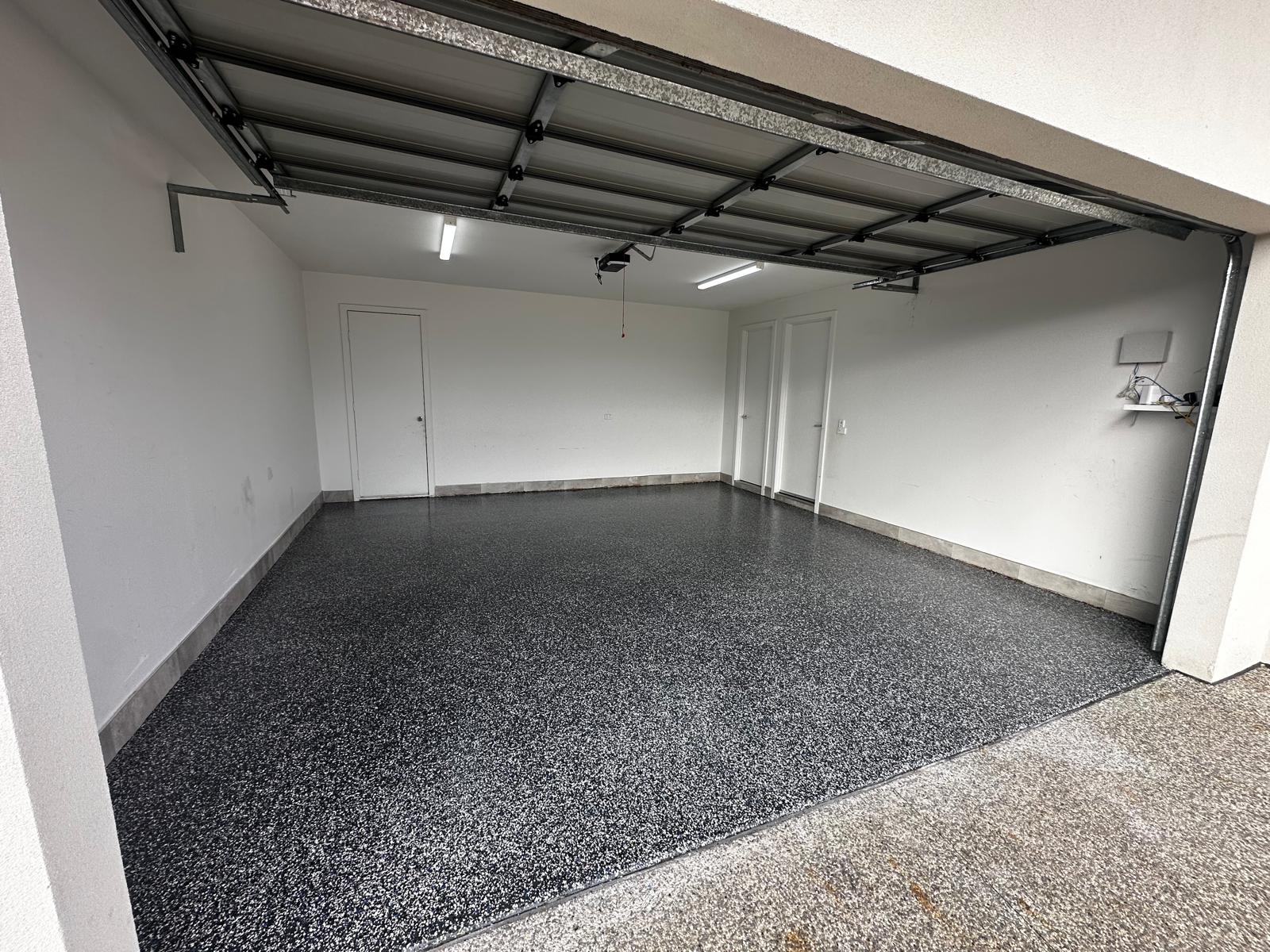
Owns the grinding equipment, uses it every day, and does nothing else. Reads a slab quickly because they have seen a few thousand of them, and prices the awkward parts up front instead of discovering them on day one. Usually the same price as a good sole trader and well under a franchise.
| Provider | Typical double garage | Grinding | Written warranty |
|---|---|---|---|
| DIY kit | $300–$600 in materials | Hire machine, usually inadequate | Product only |
| Painter or handyman | $1,200–$2,000 | Often etch instead | Rarely |
| Sole trader | $1,600–$2,600 | Varies widely | Sometimes |
| Franchise | $3,000–$5,000 | Yes | Yes |
| Specialist installer | From $2,400 | Yes, owned equipment | Yes |
What a complete service includes
This is the scope worth expecting in writing. Anything missing from a quote is a genuine question, not a technicality.
- On-site measure and slab assessment
- Moisture test
- Masking of walls and openings to around 300mm
- Diamond grinding with industrial dust extraction
- Edge grinding to the perimeter and around obstacles
- Crack routing and structural repair
- Joint and pit treatment where present
- Vacuum and tack-off
- Primer coat
- Coloured base coat
- Flake broadcast to refusal
- Scrape-back and vacuum of loose flake
- Clear polyaspartic topcoat
- Clean-up, aftercare instructions and a written warranty
The topcoat is worth checking by name. A concrete sealer used in place of polyaspartic is a downgrade dressed up as a finish — the reasoning is in why concrete sealers are not suitable for epoxy floors. The full layer-by-layer breakdown sits in our guide to garage floor coating in Melbourne.
What the two days look like
Day one is preparation. Masking, then grinding — the noisy, dusty, entirely invisible part you are actually paying for. Cracks are chased open and filled, the slab is vacuumed, and the primer goes down late in the day to cure overnight.
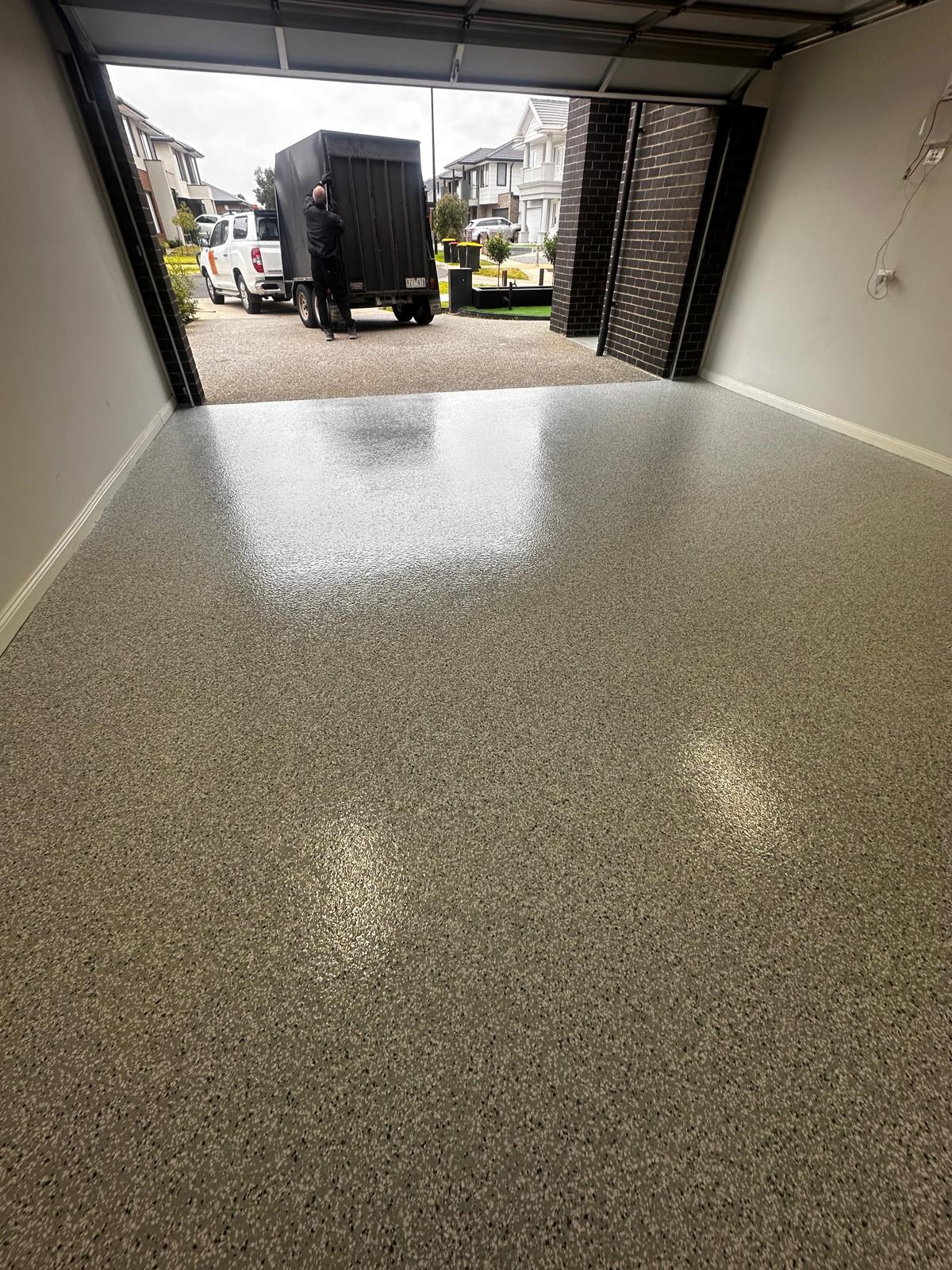
Day two is the finish. Coloured base coat, flake thrown until the surface takes no more, then a wait while it sets. The excess is scraped back and vacuumed, and the clear polyaspartic topcoat goes on last.
Then it cures: walk on it after 24 hours, put storage back after 48, park a car after 72. Full timings are in how long epoxy flooring takes.
Want that scope in writing for your garage? Request a free measure or call 0451 980 606.
Comparing two quotes properly
The usual mistake is comparing totals. Compare inclusions instead. Two real-shaped quotes for the same double garage:
| Line item | Quote A — $1,650 | Quote B — $2,450 |
|---|---|---|
| Slab preparation | Clean and acid etch | Diamond grind, dust extracted |
| Edges | Not mentioned | Edge ground to perimeter |
| Moisture test | Not mentioned | Included |
| Cracks | "Coated over" | Routed, filled, ground flush |
| Coats | Base + flake | Primer, base, flake, polyaspartic |
| Warranty | Verbal | Written |
Quote A is not $800 cheaper. It is a different, smaller job that happens to look the same in photographs for about eighteen months. Broader pricing sits in how much epoxy flooring costs in Melbourne, with garage-specific numbers in double garage epoxy flooring cost and single garage epoxy flooring cost.
What happens after the job
The service does not finish when the van leaves. A provider worth hiring will tell you, unprompted, how to look after the floor — no harsh solvents, wipe spills rather than leaving them, and mind hot tyres in the first fortnight while the coating reaches full hardness, which is covered in can hot tyres damage epoxy garage floors.
They will also tell you what happens if something is wrong. Properly installed flake floors run fifteen years or more — see how long epoxy flooring lasts — and where damage does occur it is usually repairable, as set out in can epoxy flooring be repaired. What matters is that someone answers the phone.
Eight questions worth asking
- How will you prepare the slab, and do you own the grinder?
- Is the grinder connected to dust extraction?
- Do you test for moisture before quoting?
- What happens if you find cracks?
- How many coats, and what is the topcoat product?
- Is the price fixed, and what would count as a variation?
- Are you insured, and what does the warranty cover in writing?
- Can I see photos of your own recent jobs, with suburbs?
Working with GoPoxy
We are a specialist installer based in Mickleham, working across Melbourne since 2020, with more than 2,000 floors completed. Garage floors are core work rather than a sideline, and we own the grinding and extraction equipment we use.
Every job is diamond ground — no etching, no exceptions — and the preparation is itemised on the quote so you can hold it against anyone else's. If a slab needs a moisture barrier or has an old coating to strip, we identify it at the measure and price it before we start.
See the systems on flake epoxy flooring and metallic epoxy flooring, or the garage pages for double garages and single garages. If you are still weighing options, flake epoxy vs garage tiles is a useful comparison, and 7 signs your garage floor needs epoxy covers whether the slab is ready.
Frequently asked questions
What does a garage floor epoxy service provider actually do?
A complete service covers the whole job: an on-site measure and slab assessment, moisture testing, masking, diamond grinding, crack and joint repair, primer, coloured base coat, flake broadcast, scrape-back and vacuum, a polyaspartic topcoat, clean-up, and a written warranty. A provider quoting only "supply and apply epoxy" is quoting a fraction of that.
What types of garage floor epoxy providers are there?
Broadly five: DIY kits from hardware stores, painters or handymen who add floors as a sideline, sole traders who hire a grinder for the day, franchise operators working to a national script, and specialist epoxy installers who own their equipment and do nothing else. They are not interchangeable, and the price differences between them usually reflect what is being left out.
Is a specialist provider worth more than a general trade?
For a floor you intend to keep, yes. Epoxy fails at the bond, and the bond is created by preparation. A specialist owns the grinding equipment, uses it daily, and can read a slab. A general trade with a hired machine is learning on your garage.
How much should the service cost?
From $1,400 for a single garage and from $2,400 for a standard double, complete. That is the whole service including grinding, repairs and all coats. Kits sit around $300 to $600 in materials, but you supply the labour, the grinder hire and the risk.
Why are some quotes so much cheaper?
Almost always because preparation has been removed. Grinding is the most expensive and least visible part of the job, so it is the first thing cut. The finished floor looks identical on day one. The difference shows up in year two.
How long should the provider be on site?
Two days for a standard garage. Anyone offering a complete epoxy system in one day has either skipped the grinding or skipped a coat, because the primer needs overnight to cure.
Should the provider supply a written scope of works?
Yes. The quote should list what is included line by line, so you can hold it against a competing quote and see exactly where they differ. A single lump sum with no breakdown tells you nothing.
Do I need to be home while they work?
Not for the whole two days, but access is needed both days and someone should be there at the start so colour and layout can be confirmed. Most customers arrange access and go to work.
What should the provider do about cracks?
Route them out into a clean channel, fill with a structural repair compound and grind flush before priming. Coating straight over a crack simply telegraphs it back through the finish within a season.
Is moisture testing part of the service?
It should be, and it takes twenty minutes. Moisture rising through a slab lifts a coating from underneath no matter how good the surface preparation was. If the reading is high the fix is a moisture-barrier primer, which adds about a day.
What equipment should a proper provider bring?
A weighted planetary grinder with diamond tooling, an industrial dust extractor coupled to it, an edge grinder for the perimeter, and spiked shoes and rollers for the coats. If the grinder is not connected to extraction, that dust is going through the internal door into your house.
Does the provider handle the clean-up?
A complete service does. Masking comes off, the driveway is swept, and the garage is left usable. Clean-up is a reasonable thing to confirm before booking rather than assume.
What warranty should a provider give?
A written workmanship warranty covering peeling, delamination and coating failure caused by the installation. It should honestly exclude impact damage, chemical spills left sitting, and driving on the floor before cure times have passed. A verbal promise with nothing on paper is not a warranty.
Should the provider be insured?
Yes. Public liability cover is the minimum, because heavy grinding equipment and chemicals are being used inside your property. Ask for the certificate before booking.
What happens if something goes wrong afterwards?
A provider who intends to stay in business comes back and looks at it. Ask before booking how callbacks are handled and who you contact. A provider who cannot answer that is telling you something.
Can a provider work in winter?
Yes, and the two days on site do not change. Cure time stretches in the cold, so the wait before parking on it moves from about three days to closer to a week. A provider quoting identical cure times in July and January has not thought it through.
How do I check a provider is real?
Look for an ABN, an insurance certificate, a written quote on letterhead, and photographs of their own completed work with suburbs attached. Supplier stock images are common in this trade and prove nothing.
How far in advance do providers book?
One to three weeks is typical, longer through spring and before Christmas. If a provider is available tomorrow through the busy season, it is worth asking why.
What areas does GoPoxy service?
All of Melbourne. We are based in Mickleham and install across the north, west, south-east and inner suburbs, including Craigieburn, Epping, Point Cook, Clyde, Werribee, Berwick and Pakenham.
How do I get a quote?
Call 0451 980 606 or send an enquiry through the website. The on-site measure is free and carries no obligation. We assess the slab, test it for moisture, and leave you with a fixed written price listing everything included.
Get a quote you can compare
Ask us the eight questions. We will answer all of them, put the scope in writing, and give you a fixed price based on your actual slab rather than a number guessed over the phone.
The visit is free and there is no obligation. If you have another quote in hand, bring it — we will tell you honestly what the difference between them is.
Planning an epoxy floor in Melbourne?
Book a free on-site inspection and get a fixed written quote — no obligation.